


Roland TR-1000

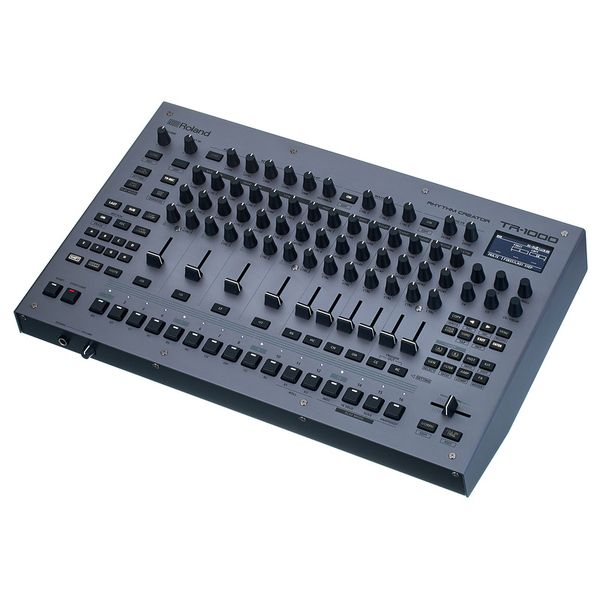
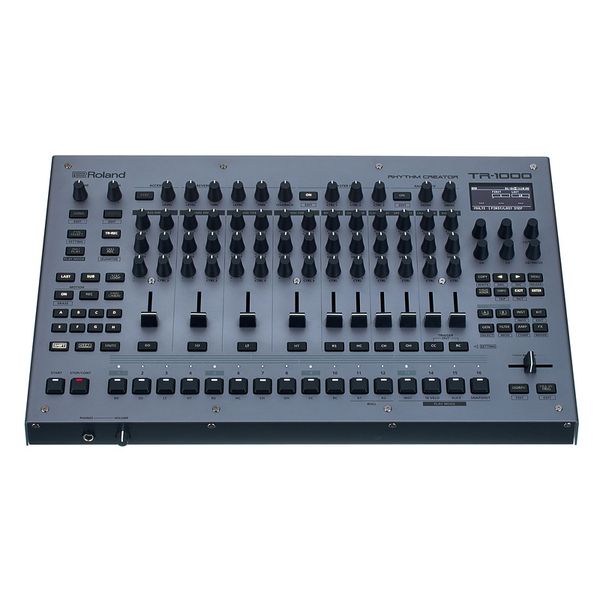
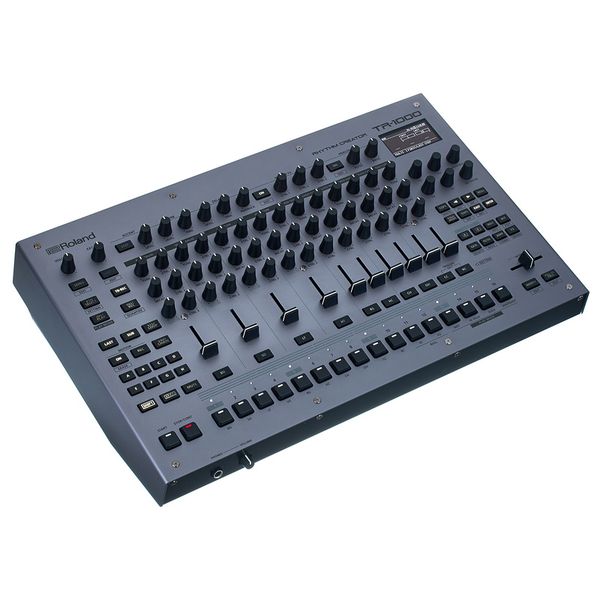
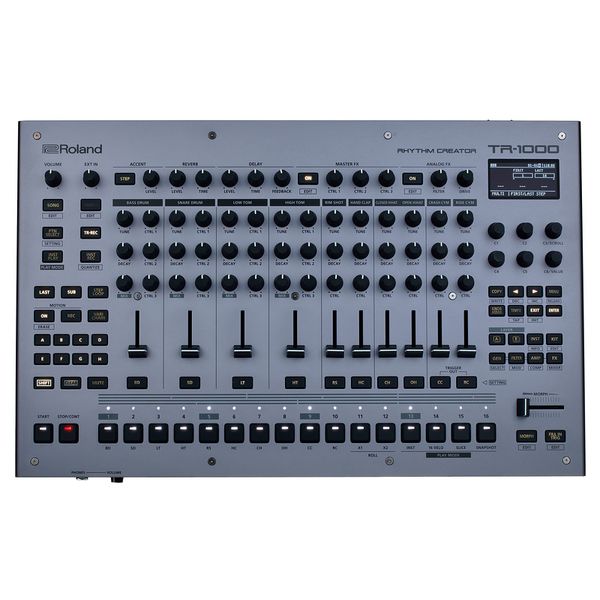


Caja de ritmos
- Rhythm Creator
- 16 instrumentos analógicos con el sonido auténtico de la TR-808 y la TR-909, además de capacidades ampliadas
- 10 instrumentos analógicos TR-808: bombo, caja, tom grave, tom agudo, rim shot, palmada, charles abierto, charles cerrado, platillo y cencerro
- 6 instrumentos analógicos TR-909: bombo, caja, tom grave, tom agudo, rim shot y palmada
- 50 motores de sonido ACB (Analogue Circuit Behaviour) diferentes con una amplia gama de parámetros
- Generación de sonido FM para sonidos de percusión digital
- Sintetizador analógico virtual y más de 2500 muestras PCM para sonidos de bajo y sintetizador, efectos y mucho más
- Sampling y Re-Sampling estéreo con Time Stretching y Beat Slicing
- 46 GB de espacio de almacenamiento para tus propias muestras (16 bits / 48 kHz)
- Por instrumento: compresor, filtro (filtro multimodo o ecualizador de 4 bandas), amplificador con envolvente
- 4 instrumentos con función de capa (2 motores de sonido), sidechaining y LFO de modulación
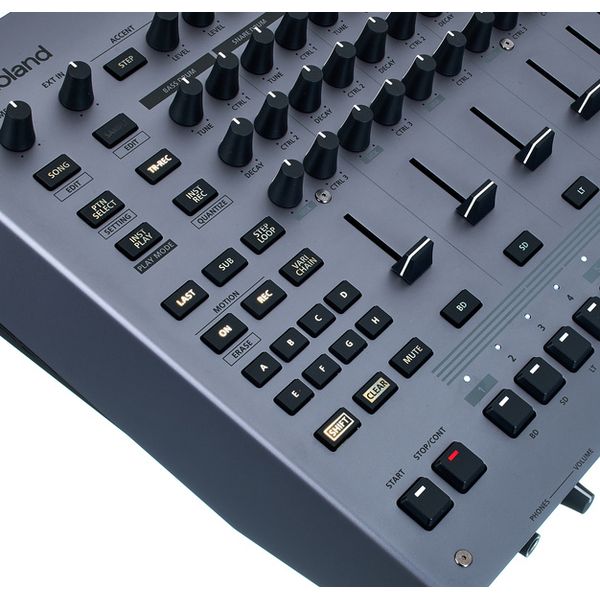
- Secuenciador por pasos con 10 pistas y hasta 128 pasos por pista
- TR-Recording, Realtime-Recording, Motion Recording para la automatización de parámetros
- Espacio de memoria para 16 proyectos, 2048 patrones y 2048 kits de batería
- Sección de efectos master con filtro analógico y drive, efectos de inserción digitales, compresor, reverberación y delay
- Fader Morph para mezclar ajustes de parámetros
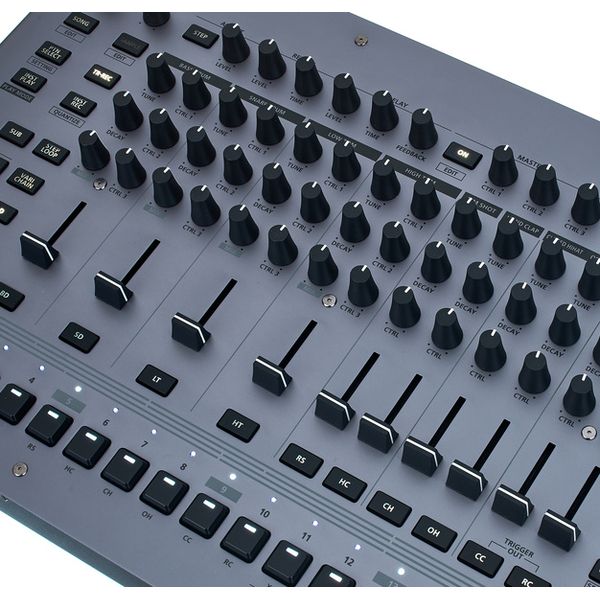
- 42 controles y 10 faders para editar instrumentos
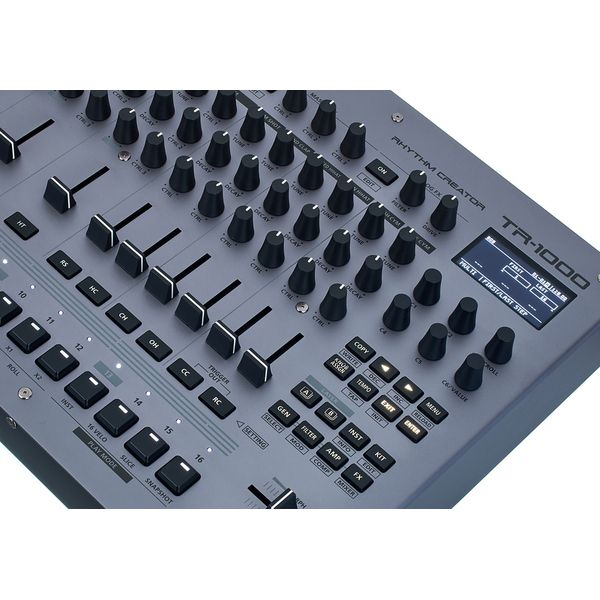
- Pantalla OLED y 6 codificadores
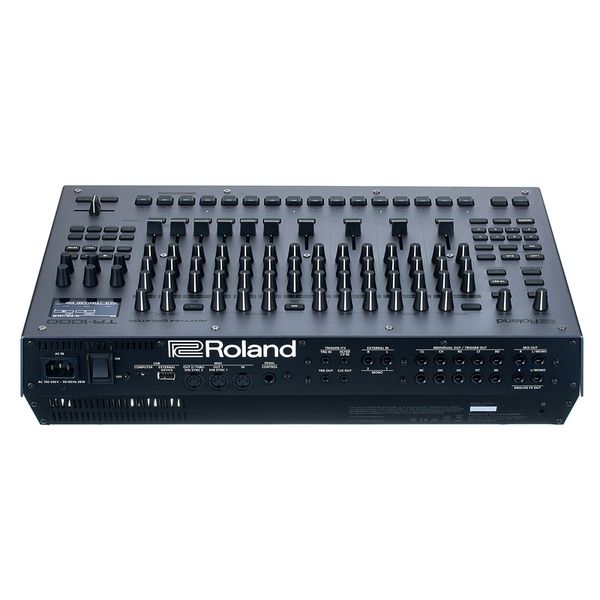
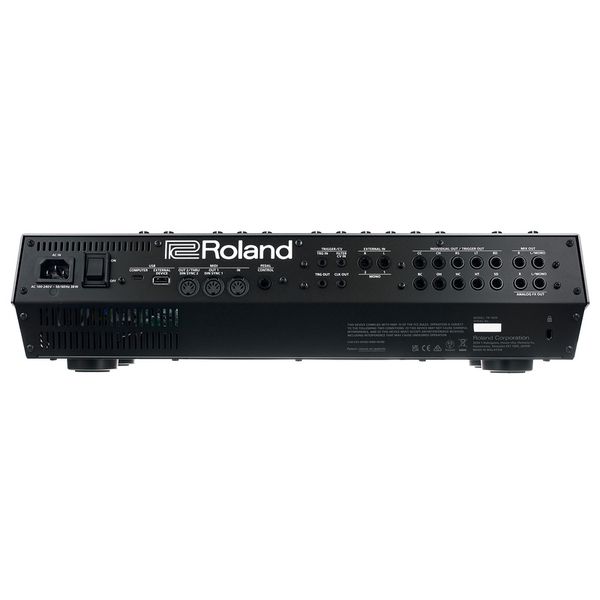
- Salida de mezcla (2 conectores jack de 6,3 mm)
- Salida de efectos analógicos (2 conectores jack de 6,3 mm)
- 10 salidas individuales (conector jack de 6,3 mm)
- Salida de auriculares estéreo con control de volumen: conector jack de 6,3 mm
- Entrada externa: 2x Jack de 6.3 mm
- Entradas Trigger y CV: 2 Minijack de 3,5 mm
- Salidas Trigger y Clock: 2 Minijack de 3,5 mm
- Entrada para pedal: Jack de 6,3 mm
- Entrada MIDI, salida 1, salida 2 / Thru (DIN de 5 pines)
- Puerto USB-A para dispositivos externos y medios de almacenamiento
- Puerto USB-C para audio y MIDI USB
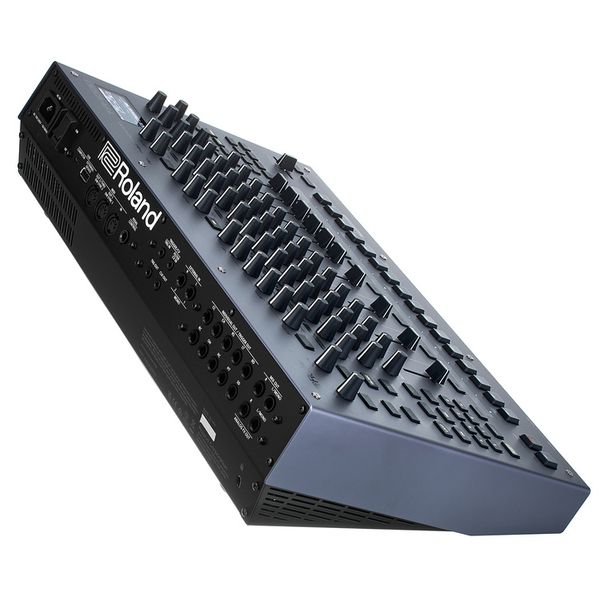
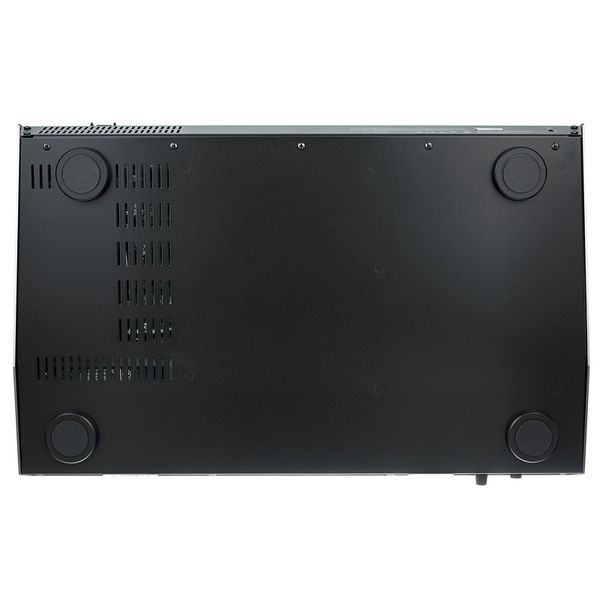
- Robusta carcasa de metal
- Medidas (An x Pr x Al): 486 x 311 x 125 mm
- Peso: 5,5 kg
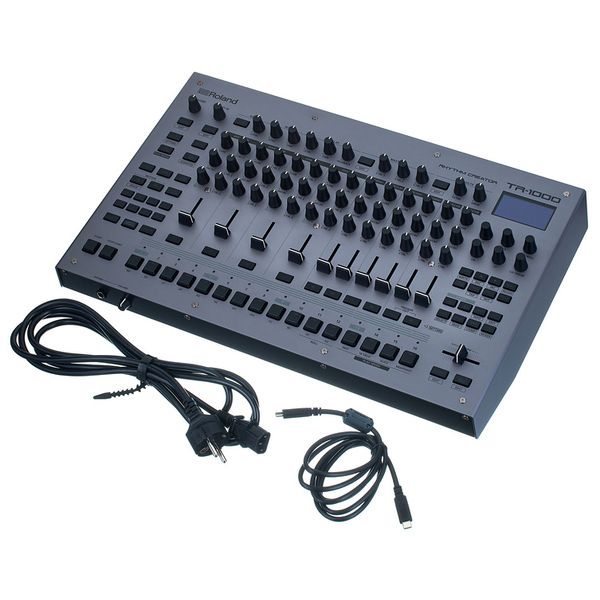
- Incluye cable de alimentación, manual de usuario y cable USB-C
-
Disponible desde Octubre 2025
-
número de artículo 623272
-
Precio por 1 Unidad(es)
-
Display Sí
-
Pads 16
-
Fader 10
-
Efectos Sí
-
Función Sampling Sí
-
Medio de almacenamiento Interno
-
Interfaz MIDI In, Out, Thru
-
USB Sí
-
Número de salidas analógicas 14
-
Conexión para auriculares Sí
-
Bajo Sí
-
Conectores de pedal 1
-
Alimentación por red Sí
-
Diseño Sobremesa (Desktop)
-
La TR entra en una nueva era
La TR-1000 es la primera caja de ritmos Roland que combina circuitos TR analógicos, de nuevo diseño, con motores digitales modernos, y el primer modelo de Roland en utilizar nuevos circuitos analógicos en 40 años (todo en un único instrumento). Roland ha recreado dieciséis circuitos icónicos de las 808 y 909, complementados por motores de síntesis digital (ACB, VA, FM y PCM) y una amplia sección de muestreo. Estos elementos se pueden apilar en kits multicapa, con controles ampliados (como la afinación y el decaimiento infinito del bombo 808), para un control más profundo sobre los sonidos TR clásicos. Completan el diseño un secuenciador de interpretación flexible, con grabación de movimiento y no cuantizada, probabilidad y rellenos, un fader "Morph" expresivo, y secciones dedicadas de Sidechain y efectos. Con su resistente chasis metálico, 46GB de memoria para muestras de usuario y amplia conectividad, la TR-1000 destaca en el estudio y el escenario.

)
Secuencia, capa, muestra
En esencia, la TR-1000 es una potente herramienta multipista. Cada pista está construida en torno a un motor de sonido seleccionable, con filtro, compresor y efectos, ideal para ajustes rápidos y edición más compleja. Sus cuatro pistas de doble capa permiten superponer dos instrumentos (por ejemplo, un bombo 808 y un subgrave), mientras que las seis pistas restantes manejan la batería y la percusión, al estilo Roland. Los patrones se pueden programar a través de la clásica cuadrícula TR-REC o grabar en vivo, para luego encadenarlos en estructuras de canciones completas (con ocho variaciones y rellenos), que se pueden recuperar en el modo "Song". La pantalla de alta resolución, con seis codificadores, permite la edición en tiempo real, y el motor de muestreo (con detección de transitorios) captura, estira en el tiempo, trocea y remuestrea loops o One-Shots sobre la marcha, asignándolos directamente a las teclas de paso para una reproducción instantánea.
)
Híbrido analógico
La TR-1000 es especialista en configuraciones híbridas, una pieza central de un equipo para actuar en vivo, una herramienta de creación de ritmos en el estudio o el eje rítmico de un grupo. Su combinación de circuitos analógicos, motores digitales y sección de muestreo se adapta a improvisaciones espontáneas y a producciones pulidas. Los controles por pista, el fader "Morph" y las instantáneas (que guardan hasta 16 estados de pista recuperables) mantienen los ajustes en tiempo real (variaciones, rellenos y breaks) a mano, incluso en patrones densos. La grabación no cuantizada y el "microtiming" humanizan los ritmos, mientras que "Step Loop" y el encadenamiento de patrones en cola satisfacen a improvisadores y a compositores, garantizando un control creativo sobre arreglos complejos. Los músicos electrónicos en vivo, los productores de estudio y los grupos híbridos encontrarán en él un eje fiable y flexible para sus flujos de trabajo rítmicos.
)
Acerca de Roland
La compañía Roland fue fundada en 1972 en la cuidad de Osaka en Japón, y desde entonces desarrolla y construye instrumentos musicales electrónicos. En su exitosa historia, Roland ha lanzado al mercado muchos instrumentos pioneros, desde cajas de ritmos legendarias como la TR-808 o la TR-909, hasta sintetizadores clásicos como el Jupiter-8, el SH-101 o el icónico TB-303. Junto a los sintetizadores, también las Workstations y los pianos electrónicos de Roland son muy populares. E Igualmente conocida es la marca Boss, perteneciente a Roland y principalmente orientada al diseño y distribución de dispositivos de efectos de guitarra. Bajo la marca Roland Professional A/V, la compañía también desarrolla y comercializa equipos profesionales para prácticamente todas las áreas de producción de audio y video, desde el uso doméstico hasta el entorno comercial.
Amplia conectividad, control completo
Con su exhaustiva colección de entradas y salidas, la TR-1000 se adapta fácilmente a casi cualquier configuración. Las salidas principales estéreo, un par de salidas FX dedicadas y diez salidas jack de 1/4" (configurables como salidas individuales o salidas de disparo) alimentan mesas de mezclas, interfaces o equipos externos, mientras que las entradas externas enrutan sintetizadores, grooveboxes o incluso voces, hacia los efectos internos y el Sidechain de la TR-1000. Las entradas/salidas MIDI, la sincronización DIN y el audio/MIDI USB se integran de forma fluida con DAWs, mezcladores de DJ o controladores, mientras que la App de escritorio dedicada admite la edición de muestras, la gestión de kits y el enrutamiento multicanal. Las conexiones adicionales de 1/8" para disparador, reloj y filtro CV amplían aún más la compatibilidad con sistemas modulares o cajas de ritmos vintage.
En el punto de mira
Fader "Morph"
El fader "Morph" es la herramienta de interpretación más expresiva de la TR-1000, ya que permite a los músicos combinar múltiples parámetros (barridos de filtro, mezclas de efectos, equilibrios de capas o curvas de tono) en un único movimiento intuitivo. A diferencia de los cambios de escena absolutos, "Morph" aplica compensaciones relativas a los valores de control actuales del panel, creando transiciones y modulaciones suaves entre estados sonoros, sin necesidad de navegar por los menús. En combinación con 16 configuraciones de instantáneas almacenables y el disparador de rellenos, permite recuperar variaciones completas de kits, configuraciones de efectos o ajustes de nivel al instante, reforzando el estatus de la TR-1000 como un instrumento musical propio, improvisando en vivo o grabando en un estudio (todo dentro del flujo de trabajo clásico de TR).
)