Ir al contenido de la página

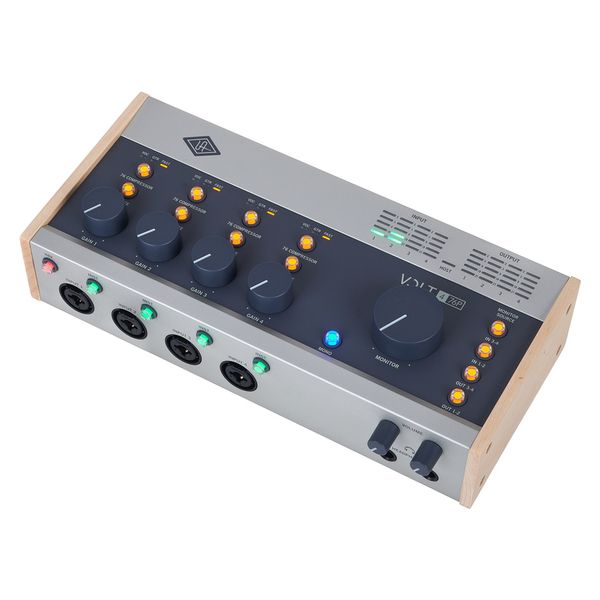
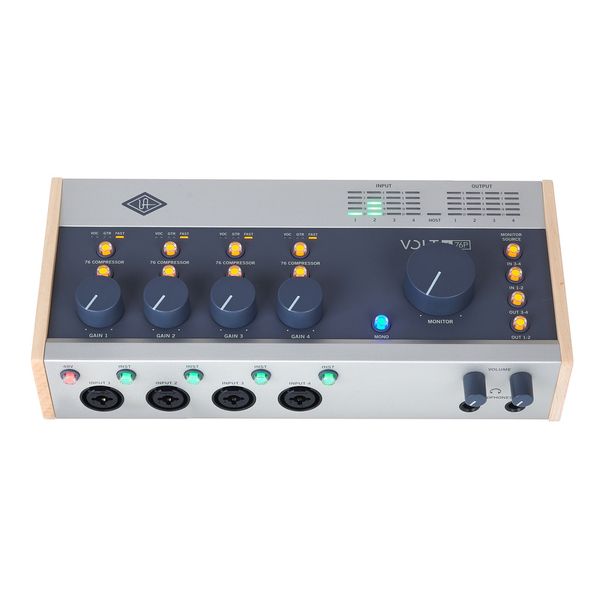
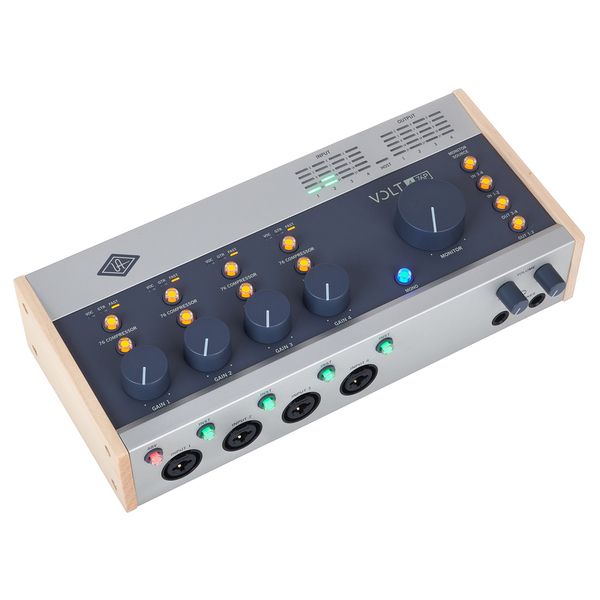
Universal Audio Volt 476P USB Recording Studio

4.9 sobre 5 estrellas de 58 valoraciones de clientes ()
Volt Promo

Ahorro inmediato con Volt

Desde el 01.06. hasta el 30.06.2026 una selección de interfaces de audio Universal Audio Volt Audio estará disponible a precio especial.

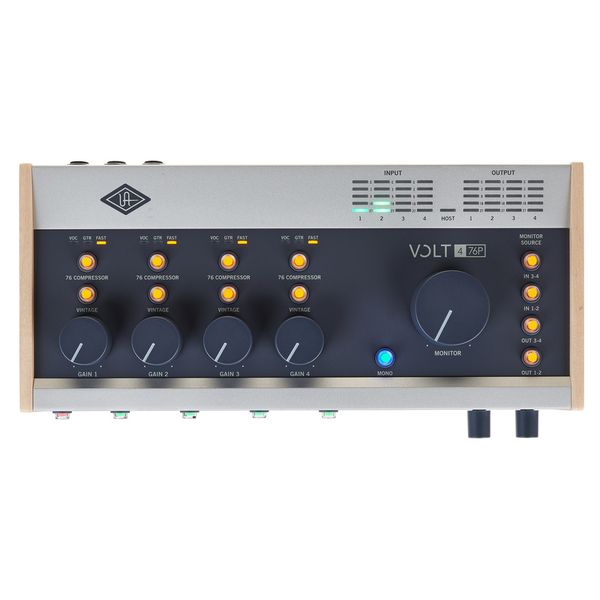
Interfaz de Audio USB de 4 x 4

  • Convertidor AD/DA de 24 bits / 192 kHz
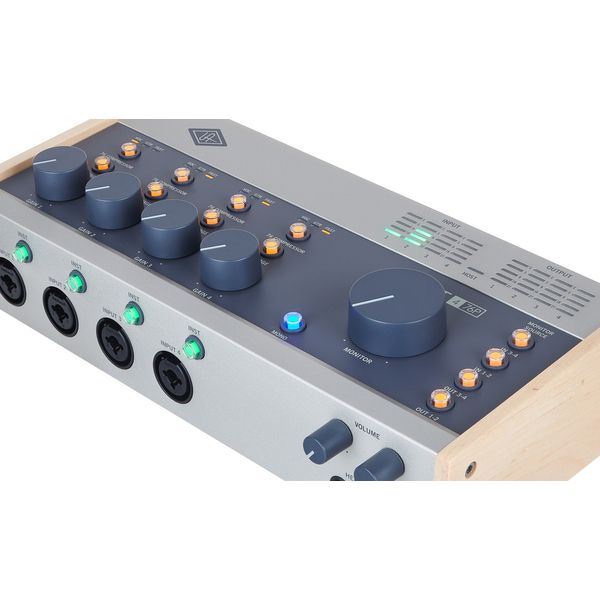
  • Preamplificadores de micrófono integrados con "Vintage Mic Preamp Mode"
  • Compresor 76 incorporado (basado en el UA 1176)
  • Alimentación fantasma de +48 V conmutable
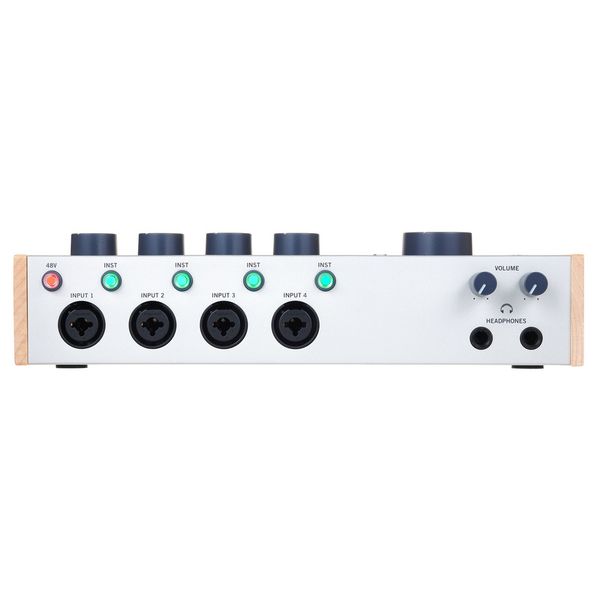
  • Amplificador de auriculares
  • Monitorización directa
  • Cuatro entradas combo de micrófono/instrumento/línea: XLR/Jack de 6,3 mm
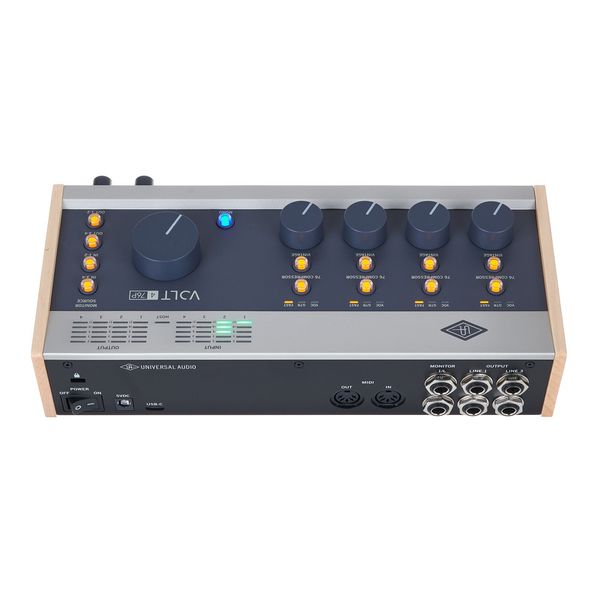
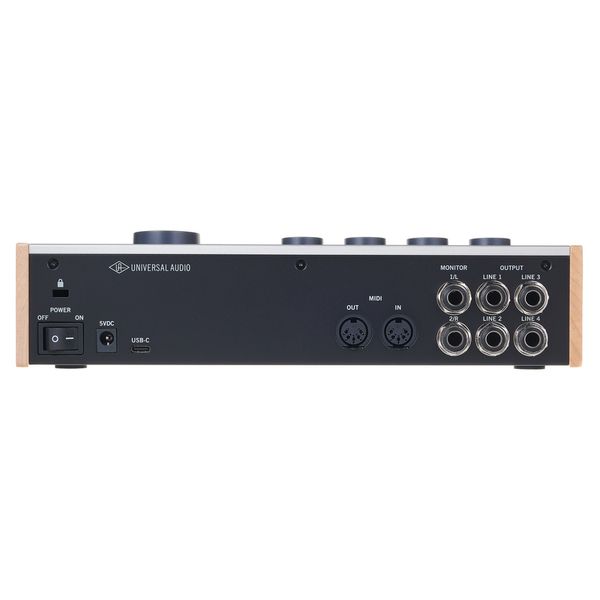
  • Cuatro salidas de línea: Jack de 6,3 mm
  • salidas de monitor: Jack de 6,3 mm
  • Dos salidas de auriculares estéreo: Jack de 6,3 mm
  • Una entrada y salida MIDI
  • Entrada de 5 V DC para fuente de alimentación
  • Conexión USB-C
  • Compatible con PC (Windows 10 de 64 bits), Mac (macOS 10,14 Mojave o posterior), iPad y iPhone (iOS 14 o posterior)
  • Dimensiones (ancho x alto x profundo): 262 x 132 x 66 mm
  • Peso: 1,1 kg
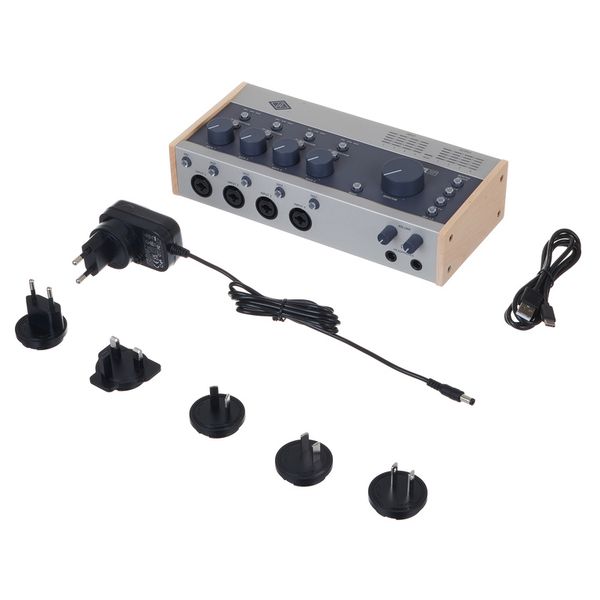
  • Incluye fuente de alimentación externa y cable USB-C a USB-A

Software incluido:

  • Ableton Live Lite
  • Softube Marshall Plexi Classic Amp Softube Time & Tone Bundle
  • Celemony Melodyne Essential
  • Plugin Alliance Ampeg SVT-VR Classic
  • UJAM Virtual Drummer DEEP y Virtual Bassist DANDY
  • Spitfire LABS

Software UA incluido:

  • LUNA Digital Audio Workstation
  • PolyMAX Polyphonic Synth
  • Century Tube Channel Strip
  • Pultec Passive EQ Collection
  • Teletronix LA-2A Classic Leveler Collection
  • Galaxy Tape Echo
  • Pure Plate Reverb
  • Oxide Tape Recorder
  • Verve Analog Machines Essentials
  • Disponible desde Septiembre 2022
  • número de artículo 550540
  • Precio por 1 Unidad(es)
  • Canales de Grabación / Reproducción 4x4
  • Número de entradas de micrófono 4
  • Nº de entradas de Linea 4
  • Nº de entradas de instrumento 4
  • Número de Salidas de Línea 4
  • Salidas de auriculares 2
  • Phantom Power
  • Número de conectores S/PDIF 0
  • Número de conectores ADAT 0
  • Conectores AES/EBU 0
  • Conectores MADI 0
  • Ethernet 0
  • Otros conectores USB-C
  • Interfaz MIDI
  • Word Clock 0
  • Samplerate Máximo (Khz) 192 kHz
  • Resolución máxima (bit) 24 bit
  • USB Bus-Powered
  • Fuente de alimentación incluida
  • Tipo de USB 2.0
  • Tipo de conector Usb C
  • Zero Latency Monitoring
379 €
-7% 30 días mejor precio: 409 €
info
Todos los precios incluyen IVA
En stock
1

58 Valoraciones de los clientes

4.9 / 5

Uso

Características

Sonido

Fabricación

35 Reseñas

M
Esteve
Musicologo 12.04.2023
Si eres un productor con synthes, guitarras o con la necesidad de tener varias entradas para varios micros, es muy buena tarjeta cumple con lo que dicen, los efectos vintage que trae más el compresor, simplemente los utilizaría para podcast, simplemente con la toma en seco y un preamp neve, ya conseguimos una buena imagen.

Al cambiar de la tarjeta roja a esta, es un cambio rotundo en cuanto sonido, no tiene nada que ver lo que escuchaba en anteriores tarjetas, en cuanto a esta, también a la hora de grabar voces, esto imprime las voces muchísimo mejor, mucho mas natural, la comparto con unos genelec 8030 y cascos AKG, y es una combinación bastante buena, es un antes y un después.

Tengo la idea de comprar un buen equipo analogico y seguir con esta tarjeta, por ahora estoy muy contento con ella, le doy 4 estrellas a las características por que pienso que el compresor y el efecto vintage pueden ser bastante mejorables, supongo que están enfocados al directo, y poder tener compresión y efecto vintage en la voz sin tener que forzar el ordenador.
Fabricación
Características
Uso
Sonido
3
0
Reportar evaluación

Reportar evaluación

google translate gb
Lamentablemente hubo un error. Por favor, inténtelo de nuevo más tarde.
G
Volt 476P
Guitariste59 29.10.2022
I’ve been using this interface for only a couple months, but I’m so happy with the results so here’s my review. I used a UR242 for years & never had a problem with it for what I do. The dsp’s weren’t terrible, but it was nice to have them for latency issues. Only thing lacking was an insufficient number of outs, which is what I was looking for to reamp guitars. I was looking at the Tascam 208i, but then happened to see an ad for the new budget-line interfaces from UA. Normally, I would never be able to afford anything from UA, but I was intrigued by the built-in compressors & vintage preamps at a budget price.

Since then, my recordings have taken on another life. The preamps are crystal clear, 1176 compressors sound great on both vocals and instruments, and the monitoring choices are a game changer when mixing. I love that there’s also a MONO button, as I always check my mixes in MONO. I don’t use the preamps & compressors on every track, but they’re nice to have nonetheless. I’ve also tried reamping my guitars through the 1176 and the vintage preamp for a more rich tone without having to use multiple plugins. Very happy with the results.

Pros: portable, well-built with classy wood panels reminiscent of Moog pedals, 2 headphone inputs for independent monitoring, Mono button for mixing, multiple monitoring capabilities and a good amount of quality software. Budget price.

Cons: no internal dsp, like in the Apollo models. This isn’t such a big issue for me, as the included software bundle makes up for the lack of dsp.

Overall, I’m elated with this purchase and plan to write another review in a few months. I’m running an old 2011 MBP with a Mojave patch, so make sure your computer is compatible with Mojave or later if you’re running Mac OS. Flawless service from Thomann as usual.
Fabricación
Características
Uso
Sonido
11
0
Reportar evaluación

Reportar evaluación

google translate gb
Lamentablemente hubo un error. Por favor, inténtelo de nuevo más tarde.
D
Reliable, many inputs, real knobs and buttons
DerKastellan 25.03.2026
I chose this interface to replace my Focusrite Scarlett 4i4 (3rd Gen) a bit more than a month ago, and it is indeed the better product!

I had the Scarlett for many years, and a Solo before, as my recording and playback interfaces, and I routed my regular audio through it as well. The Scarletts had driver/firmware problems early on, then improved, then got less reliable late in the Windows 10 life cycle, and shortly after the migration to Windows 11 the 4i4 became practically unusable. I tried every optimization guide, clean-up, driver updates, latency analysis. I fixed the worst problems, but the interface did audible pops and clicks even at latencies of 40 ms / buffer size 512 (in "safe mode!"). My regular Windows audio that also used the Focusrite USB driver became garbled at times, would short out until I switched the driver settings. It was bad. And frankly, latency was never truly good with the Focusrite!

Not only are the issues gone after getting the Volt, it has proven rock stable and improved latency. Buffer size 128 is okay, 256 is absolutely stable without any observed issue. Even if that's only because of a better driver, that's good enough for me - because Focusrite messed this up several times over the years. It doesn't matter what an audio interface can do if you can't use it in its most basic use cases!

The next thing that's great about the Volt is that it has 4 instrument high impedance capable inputs. Since I record multiple guitars and basses, or play with friends, this can be a god-send! Even better - two monitor outs that you can dial in separately, so if I play with a friend, we can both do our own monitoring with headphones. These inputs can also handle balanced/mic inputs and provide shadow voltage. The Hi-Z behavior can be toggled - each with its own button.

Speaking of buttons. Everything the Volt can do is controlled by a hardware knob or button, everything is shown by a light. In the Focusrite Scarlett, most stuff had to be done in a software called Focusrite Control. The Volt can be completely run by buttons and apparently can be even run as a standalone. (I guess as a simple 4 track mixing desk?) It has a separate power input but can also be powered by USB. USB power also works well and is controlled by the same switch.

The only settings unavailable through the buttons are then sample rate, buffer size and, again, "safe mode." That's it. This is also the driver part your DAW will allow you to access.

I found that direct-in recording on the Volt for my bass sounds great, don't ask me what's the true difference here. I like adding the color and compressor settings as well for this scenario. They're surprisingly good given that they are mere buttons with only three configuration options for the compressor.

But even if leaving the preamp at minimum and adding none of the "special sauce" my guitar signals are just fine to work with in amp sims.

When it comes to managing input and output routings, the Volt has the ability to route inputs for direct monitoring, either in mono or stereo, and it has the ability to do output routing in a similar fashion, and a weird mixed mode that slightly reduces output volume and puts direct inputs on top. The manual is not very clear (or verbose) on how all of this works. I would have actually reduced a star in features for this because other interfaces handle this much more diversely in software, but if you use driver outputs 3 and 4 for cueing from your DAW and just switch with the existing buttons, you have everything you need for flexible monitoring without having to mess with a driver.

So, given this, the Volt is a great all-rounder with solid quality and not reliant on the driver to do its magic.
Fabricación
Características
Uso
Sonido
1
0
Reportar evaluación

Reportar evaluación

google translate gb
Lamentablemente hubo un error. Por favor, inténtelo de nuevo más tarde.
PT
Well-rounded Interface
Penny T 27.04.2023
A solid audio interface with plenty to like:
1. Great pre-amps on all channels - vocals sound clean and uncoloured, electric guitar/bass sound rich even through DI.
2. Intuitive hardware design - IO are easy to access, layout of buttons and knobs are good, meters are clear.


What could be better:
Shared phantom power button - having 1 button shared across all channels could potentially damage your mics if not mindful.

Reasons to go for a different option:
Lack of expandability - doesn't have spdif for additional inputs. If you want spdif expandability, go for the Audient ID44 MKii, which is its direct competitor.

Why you should get the Volt 476p:
Sounds good, looks good and comes with a number of great plugins. Along with the Audient ID44, this is probably the best bang for the buck mid-range interface.
Fabricación
Características
Uso
Sonido
10
1
Reportar evaluación

Reportar evaluación