


Eventide H9000 Gen2

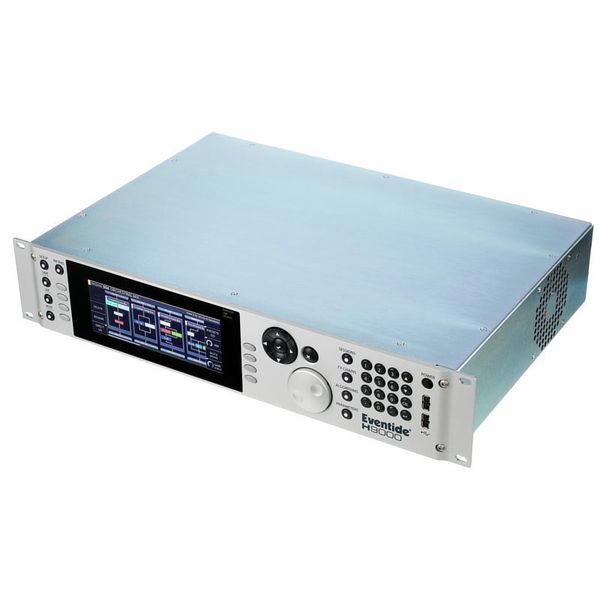
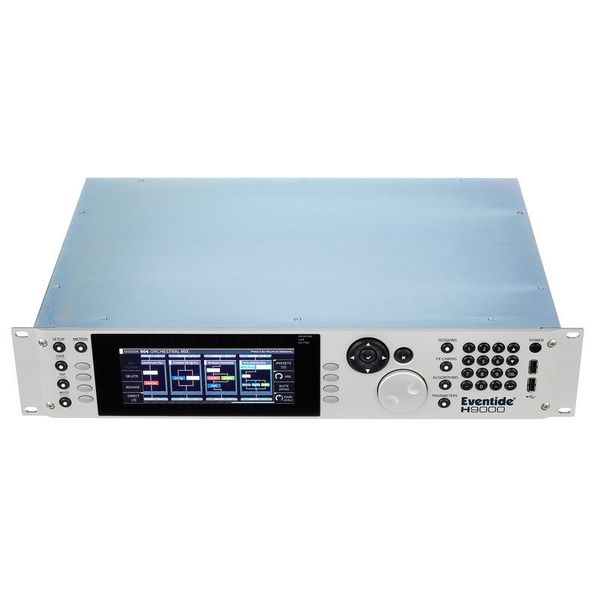
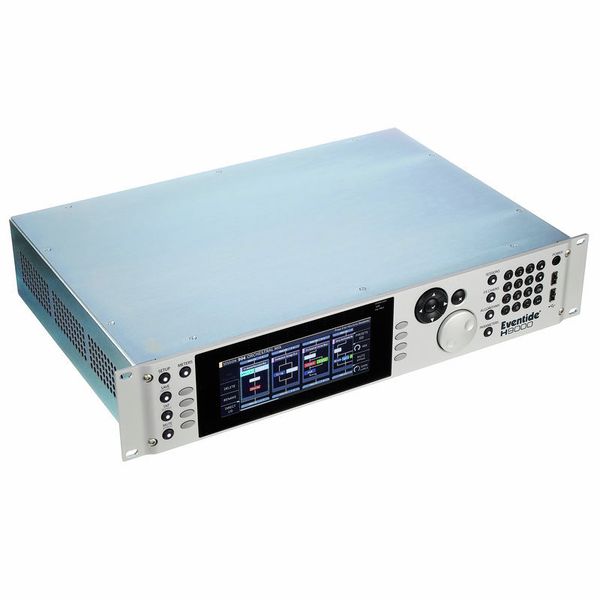


Procesador multi-efectos
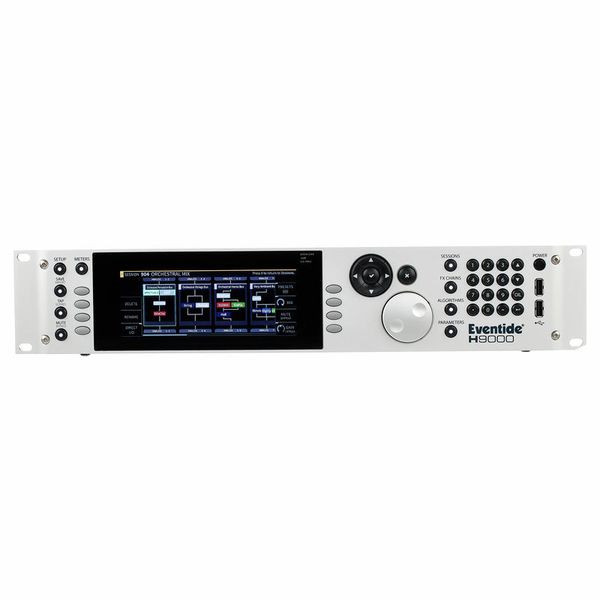
- 4 procesadores Quad-Core ARM - 16 DSPs
- 1600 algoritmos
- Posibilidad de configuración de complejas cadenas de efectos
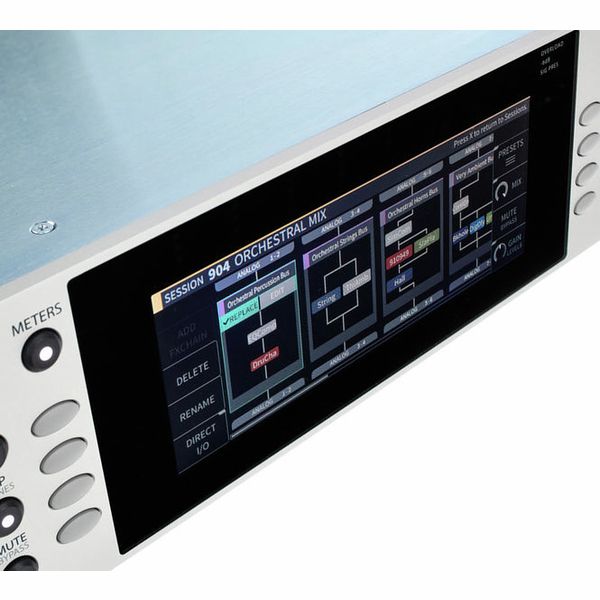
- Gran pantalla a color
- 8 medidores LED ajustables
- Audio USB de 16 canales
- Hasta 96 kHz
- Control remoto vía Software App Remote Control para Mac/Windows y Plugin DAW
- 3 puertos para óptimas ampliaciones MADI y Dante
- Medidas (An x Al x Pr): 48.3 x 8.9 x 31.7 cm
- Peso: 6.4 kg
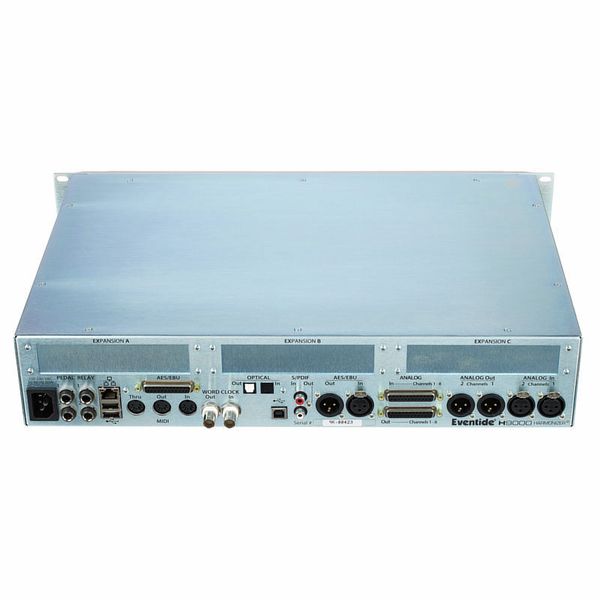
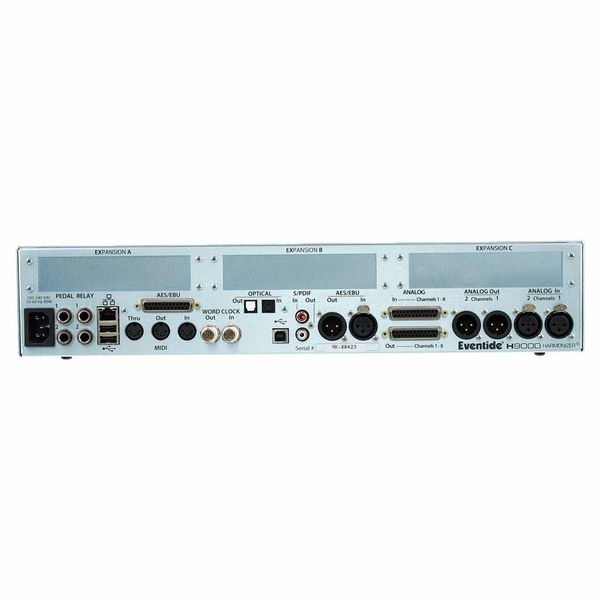
Conexiones:
- 8x entradas de línea Sub-D25
- 2x entradas de línea XLR
- 8x salidas de línea Sub-D25
- 2x salidas de línea XLR
- Entrada y salida AES/EBU
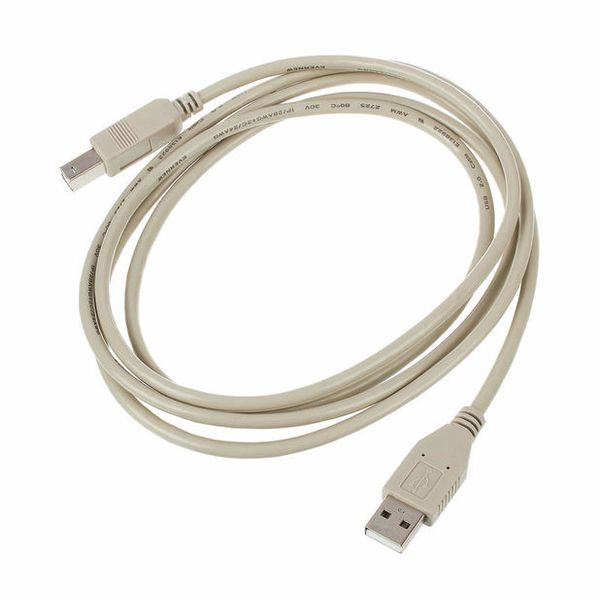
- 4x USB
- S/PDIF coaxial y óptica / ADAT
- Entrada y salida Word Clock
- MIDI In / Out / Thru
- 2 entradas de pedal Jack de 6.3 mm
- Conexión Ethernet
-
Disponible desde Octubre 2018
-
número de artículo 441712
-
Precio por 1 Unidad(es)
-
Formato 19" Sí
-
Efectos almacenables Sí
-
Funcionalidad MIDI Sí
-
Conector de pedal Sí
-
Entradas de micrófono No
La nueva generación de armonizadores
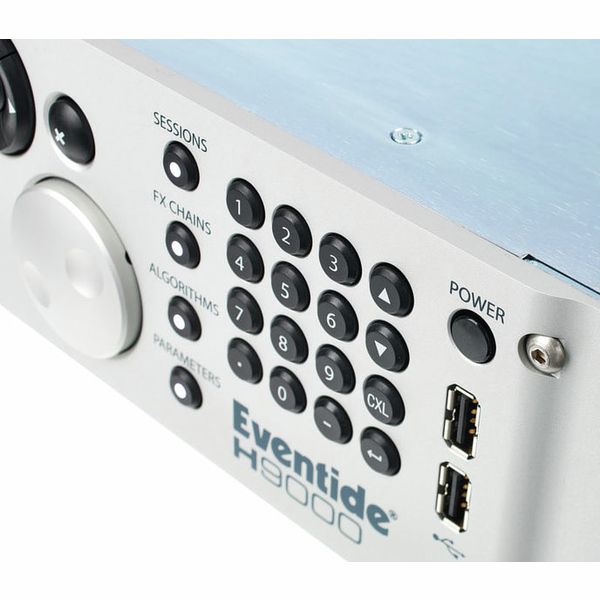
El H9000 de Eventide es un dispositivo multiefectos que también continúa la línea del H8000FW. Sus cuatro procesadores ARM de cuatro núcleos permiten ejecutar en paralelo hasta 16 efectos estéreo, y para aprovechar al máximo esta potencia, incorpora la nueva función FX Chain, que admite hasta cuatro cadenas de efectos con un máximo de cuatro algoritmos cada una. Dentro de estas cadenas, los efectos pueden configurarse en serie o en paralelo, ofreciendo una flexibilidad total. En la parte frontal, el H9000 destaca por su gran pantalla a color y un diseño clásico de panel, acompañado de teclas programables a ambos lados y botones de función iluminados. Además, el software Emote permite controlar todas las funciones del dispositivo con la misma facilidad y familiaridad que en el panel físico, ofreciendo una experiencia coherente tanto en el mundo digital como en el hardware.

)
Funciones y conexiones a raudales
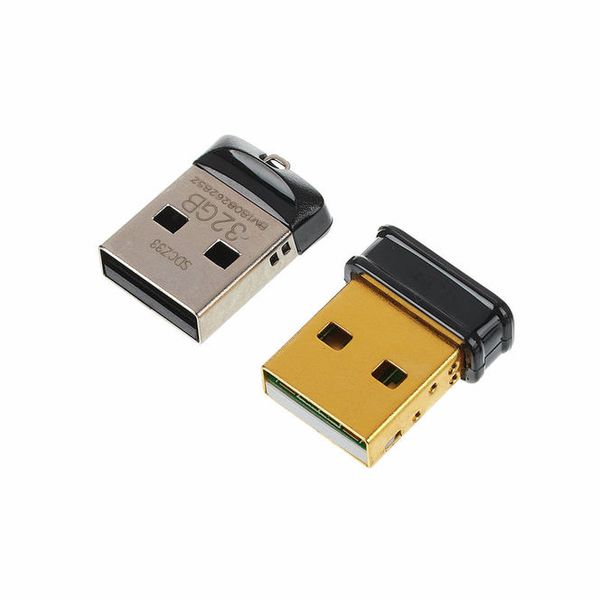
El procesador de efectos multicanal H9000 ocupa 2U en un rack estándar y ofrece una amplia variedad de opciones de entrada y salida, junto con posibilidades de expansión y conectividad en red. En su panel trasero se encuentran ocho entradas y ocho salidas analógicas, además de ocho interfaces digitales AES en formato Sub-D. Los canales AES 1 y 2, así como las dos primeras entradas y salidas analógicas, también están disponibles mediante conectores XLR. Entre las conexiones digitales adicionales se incluyen SPDIF y ADAT, y destacan las ranuras para tarjetas de expansión, que permiten integrar módulos para Pro Tools, MADI, Dante, Ravenna o AES67, cada uno capaz de gestionar hasta 32 canales de entrada y salida. El H9000 es compatible con las frecuencias de muestreo más comunes, de 44,1 a 96kHz, a excepción del formato ADAT, que no admite S/MUX. La conexión con el ordenador puede realizarse por USB, LAN o de forma inalámbrica mediante WiFi, gracias al adaptador incluido con el equipo.
)
Dispositivo complejo para presupuestos elevados
El H9000 reúne una amplia biblioteca que combina efectos de nuevo desarrollo, clásicos de Eventide y todos los del H9, situándose a la altura - e incluso por encima - de sus predecesores. Sus 1600 algoritmos ofrecen una calidad excepcional, y gracias al software Emote, con la función FX Chain y una potencia de cálculo muy superior, los efectos pueden explorarse de maneras completamente nuevas. El equipo incluye además una interfaz de audio USB de 16 canales y permite gestionar las ocho entradas y salidas analógicas mediante el enrutamiento interno, ampliando así cualquier sistema con convertidores de alta gama o un patchbay de hardware. Eso sí, su incorporación al estudio implica una inversión notable, pensada para quienes buscan un nivel profesional sin compromisos.
)
Acerca de Eventide
El fabricante estadounidense Eventide, pertenece a los pioneros de la tecnología de audio digital. La compañía ha existido desde principios de la década de los años 70s y se inició en ese entonces como desarrollador en el área de radiodifusión y efectos de delay digitales. En el año 1974 demostró con el H910 una técnica Pitch Shifter que para su época ya era revolucionaria. Un hito histórico en el campo de los efectos digitales, lo marco el H3000 (1986), fue muy bien valorado en los estudios de sonido, eventos en vivo y por los músicos profesionales. Las generaciones procedentes a este modelo se volvieron cada vez más eficientes y finalmente dieron como resultado su actual producto insignia, el H9000. Desde el 2007 Eventide también ha desarrollado pedales compactos, dirigidos principalmente a guitarristas y teclistas. Actualmente, los algoritmos de Eventide siguen siendo considerados como de los mejores del mercado.
El software Emote
El H9000 puede controlarse de forma remota mediante la aplicación Emote para Mac y PC, o a través de su versión en plugin (VST, AU y AAX). El software ofrece una interfaz clara y práctica que simplifica el manejo, permitiendo arrastrar y soltar configuraciones, cadenas de efectos, algoritmos y presets desde el navegador a la ventana principal. También incorpora pestañas que facilitan el acceso directo a las propiedades del dispositivo, los menús de configuración y las cadenas activas. Los parámetros pueden controlarse fácilmente por MIDI o USB, abriendo un menú de asignación con un simple clic. Además, la versión en plugin permite automatizar los parámetros desde el DAW, ofreciendo un flujo de trabajo fluido y moderno tanto en el estudio como en directo.
)